


Afraid of AI
Everyone is afraid that AI is going to take their jobs, along with their employer-sponsored health insurance (ESI).
That’ll be true for some workers, but the fear is too narrow. The pressing issue is not only which jobs disappear, but what kind of work arrangement remains after automation.
At its core, ESI is America’s longest-running workplace relationship. It dates back to a wartime labor market, hardened into the tax code, and became part of what people expected from a “good job.”
AI won’t end that tradition, but it may change who gets to stay in it, and on what terms:
Some workers may be replaced, losing coverage altogether.
Others may work flexibly in part-time jobs, vendor arrangements, or project-based engagements.
Some may have their roles reduced; still employed but with less scope inside smaller, cost-conscious teams.
And others may become leveraged, made more valuable as AI drives scarce (and often “high-skill”) employees to be more productive than ever.
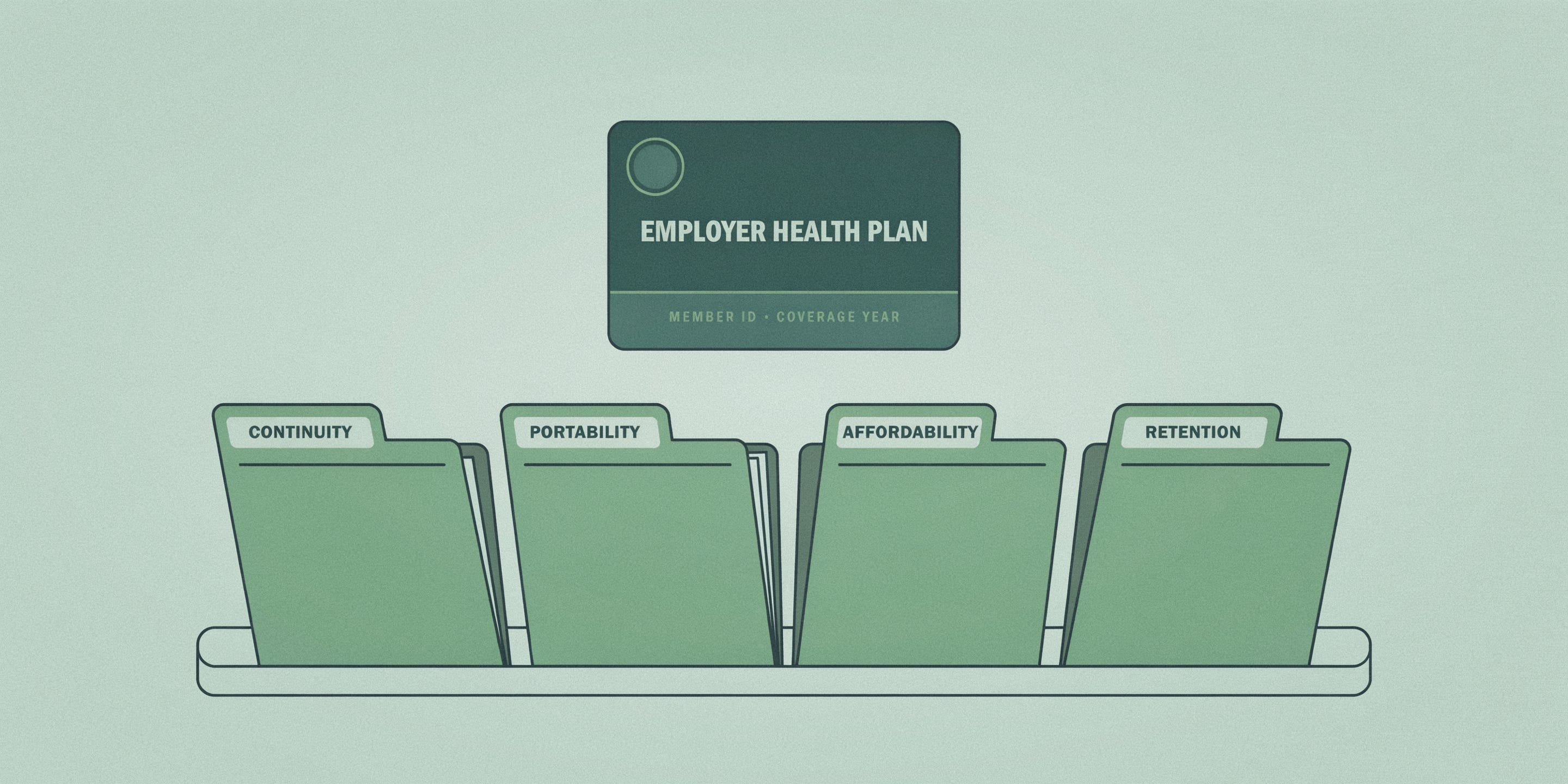
Each archetype carries its own benefits challenges: continuity, portability, affordability, or retention (respectively).
The interesting thought exercise here is what ESI is forced to evolve into as work becomes less uniform, and whether (or not) the benefits market is flexible enough to match it.
How We Split
I won’t predict where individual worker archetypes will land, because nobody really knows. The jury is still out on which industries and functions will downsize with AI, and which ones will scale up with potential increases in demand.
Law is a useful analogue here. We’ve all heard that AI might reduce the number of associates needed by automating research, document review, and drafting. But that same automation could also make more cases economically viable. If claims are cheaper to pursue, we might see more lawsuits filed.
The point is, AI utilization doesn’t translate cleanly into job loss. So, our benefits question isn’t which jobs disappear. It’s what form of attachment remains between worker and employer after the work changes.
The attachment determines the benefits problem.
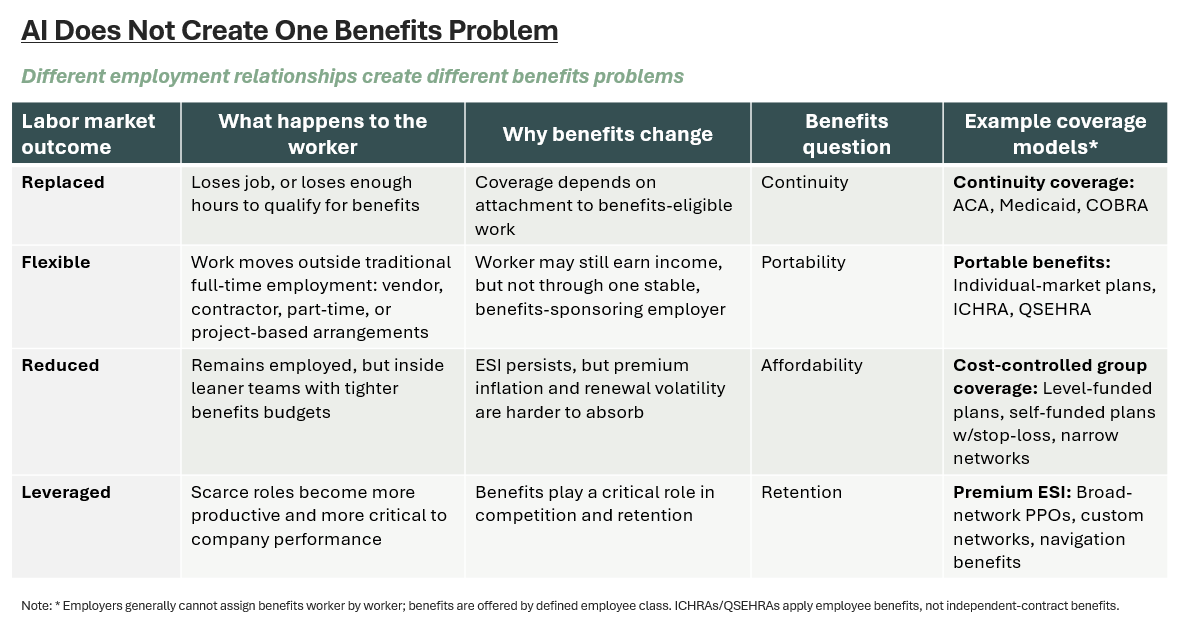
The same employer could plausibly create all four outcomes. A services company might automate part of its customer support function, move some work to contractors, keep a smaller core team under tighter cost pressure, and pay up for the few employees who now manage more volume with AI.
That’s why the benefits question fragments so quickly. The issue is not just whether people are employed. It’s how they remain tethered to the employer that still needs the work done.
The obvious counter is that employers will still use benefits to compete for talent.
I agree, and that’s why ESI won’t disappear. But that logic applies most cleanly to workers employers are still competing hard to retain. If AI makes some roles more replaceable, more variable, or less central to the operating model, the benefits bargain around those roles can weaken even while premium ESI survives for others.
That’s critical because employers are starting from an expensive baseline.
In 2025, average employer-sponsored premiums reached $9.3K for single coverage and ~$27K for family coverage. Small and mid-sized firms were not meaningfully cheaper: family coverage averaged ~$26K at firms with 10 to 199 workers, versus $27.2K at larger firms (KFF).
As AI makes work less uniform, the benefits market needs to move from a starting point that’s already quite costly to maintain.
Different Bets on Unbundling
New benefits companies are working to match a more flexible world, but they’re not all making the same bet on where employers want to go from here.
Our old model bundled every critical health plan module together: funding coverage, absorbing renewal volatility, designing the plan, selecting the network, administering the plan, and supporting members when they used it.
In a world with less standardized employment, we could see that bundle loosen.
Some employers may not want to own a group plan at all. Companies like Thatch gesture towards a world where employers contribute healthcare dollars, but the employee selects individual-market coverage through an ICHRA-style structure. That works for smaller employers, distributed teams, and eligible part-time or variable-hour employee classes.
Others might want to preserve their group-plan architecture, but with stabilized economics. Companies like Arlo aim to address this problem: small businesses that require benefits but want more predictable cost (and renewal) dynamics than fully insured plans offer. ESI ownership is still a priority, but premium inflation and renewal volatility make the default model tough to tolerate.
A third way to play here is infrastructure. Regardless of coverage model, if employers want custom networks, tiered benefits, self-funded arrangements, or other non-standard designs, someone has to make the plan work day-to-day: think eligibility, claims routing, payments, coordination with PBMs and stop-loss carriers. Companies like Yuzu are attacking the operating layer, not as a new coverage model but as infrastructure for making non-standard plans viable.
The companies mentioned here are useful examples, but a formal market mapping isn’t the point. It’s the trend we should be focused on. Benefits need to evolve to make more versions of employer-funded coverage viable.
With all that in mind, it’s important to remember that disruptors aren’t creating flexibility out of thin air. Most are not building new regulated health plans with their own risk-based capital, networks, and balance sheets. They depend on carriers, Blues plans, regional plans, stop-loss partners, TPAs, and networks to make these models work. And underlying insurance capacity is already under pressure, particularly among regional plans.
The open question is whether this is a cyclical low point or indicative of a structural reset. HealthScape / Chartis recently argued that many regional not-for-profit plans face a difficult two-year window, with national plans retaining positive margins while regional NFPs fell further into negative operating margins.
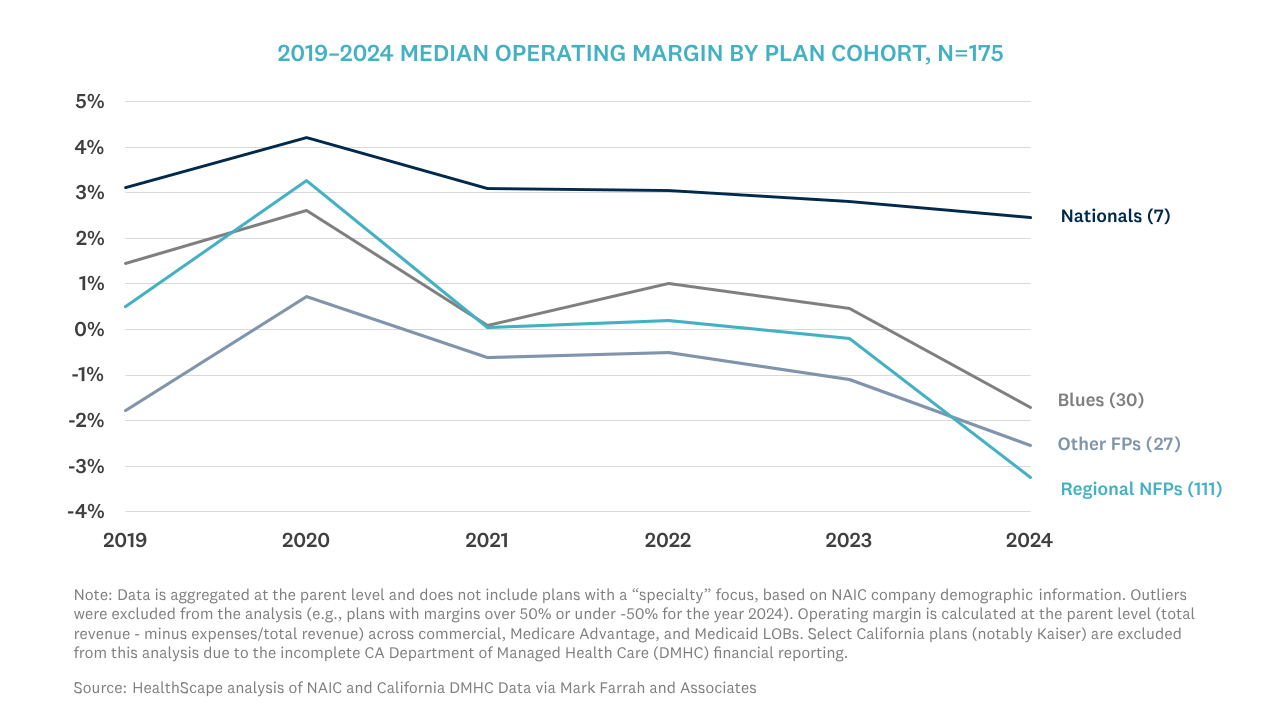
Regional plans aren’t the only answer – partnership with nationals and the Blues is possible. But historically, regionals provided a different flavor of flexibility, grounded in local provider relationships and market-specific network designs. If employers need more variation, it matters whether those plans recover, consolidate, or exit markets.
The Bargain Survives, Unevenly
Segmentation means more stratification.
Some workers will be forced to choose their own plans. Others might get cheaper, but narrower coverage. And some may keep rich benefits because they are valuable enough to retain.
Our old bargain — get a good job and receive good coverage — won’t disappear.
It just becomes less universal.
Liked this one? You might also like The Ambient Scribe Stack — a breakdown on how companies like Abridge, Ambience, and DAX are going beyond the note to rewire clinical workflows. Or The Healthcare 401(k), a breakdown of ICHRA adoption trends, market dynamics and the startups enabling a new era of employer-sponsored insurance.
I love the framing of ESI adapting to these four worker archetypes. I can also imagine a future in which it helps create them.